
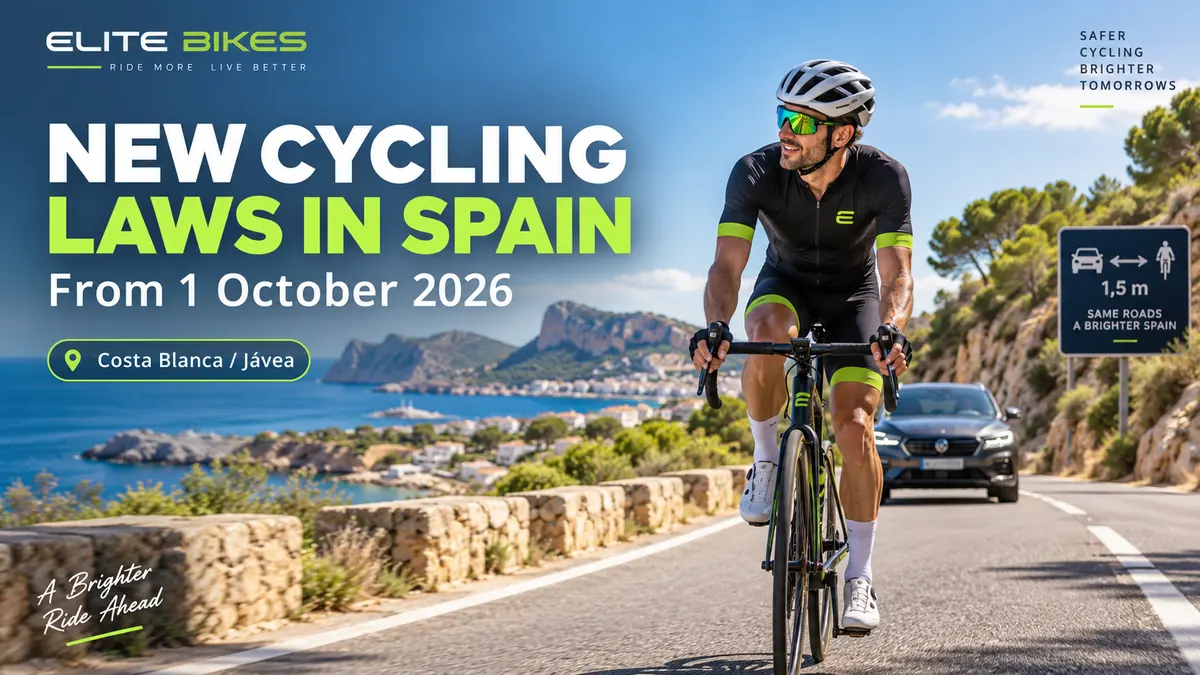
New Cycling Laws in Spain from 1 October 2026
Important changes to Spain’s traffic regulations are coming into force. If you ride a bike in Spain – whether you live here, commute, train or are visiting the Costa Blanca – these are the rules you need to know.
Minimum distance motor vehicles must keep when following a cyclist in the same lane.
Minimum lateral distance when overtaking cyclists.
Outside built-up areas, overtaking must be carried out at least 20 km/h below the applicable speed limit.
What changes for cyclists in Spain?
Spain’s Real Decreto 518/2026 introduces new measures intended to improve the safety of vulnerable road users. Several of the changes specifically affect bicycles, where cyclists may ride and how drivers must behave around them.
Drivers must stay 5 metres behind
Motor vehicles travelling behind a cyclist in the same lane must maintain a minimum following distance of five metres.
Safer overtaking
Drivers must maintain at least 1.5 metres of lateral separation when overtaking cyclists.
20 km/h slower when overtaking
Outside built-up areas, the overtaking vehicle must reduce its speed to at least 20 km/h below the applicable speed limit before and during the manoeuvre.
Cyclists can use the centre of the lane
Cyclists should preferably ride in the centre of the lane when this can be done safely for themselves and other road users.
Passing stationary traffic
Cyclists may pass other vehicles on the right or left depending on which side is safer. At traffic lights and in traffic jams, cyclists may pass stationary or frequently stopping vehicles.
No general cycling on pavements
Bicycles are vehicles and, where there is no specific cycle route, they generally belong on the road. Cycling on pavements is generally prohibited, although limited municipal exceptions can apply.
Helmet requirements
Helmets remain compulsory for cyclists on interurban roads and for riders under 16 on all roads. Professional bicycle riders must also wear a helmet while working on urban roads and through-roads.
Be visible at night
Cyclists riding on interurban roads between sunset and sunrise, or in significantly reduced visibility, must use at least one luminous or reflective item visible from a minimum of 150 metres.
What does this mean for cyclists on the Costa Blanca?
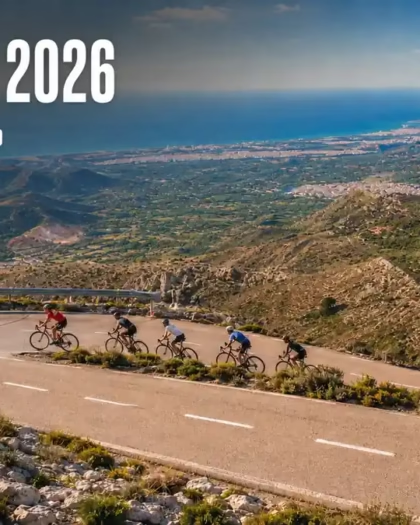
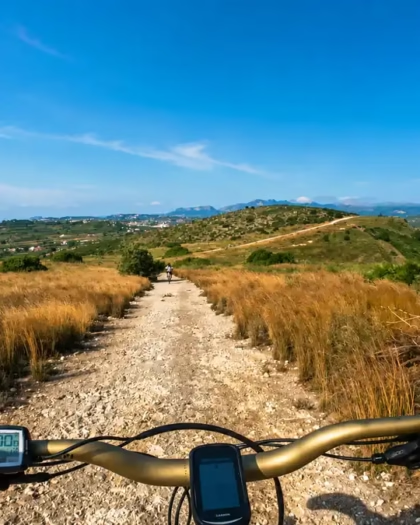
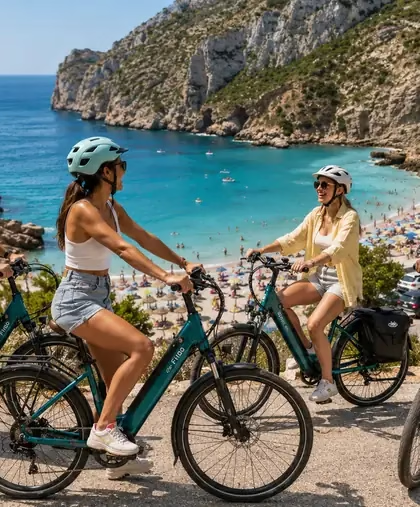
The Costa Blanca is one of Europe’s most popular cycling destinations.
Every day, road cyclists, mountain bikers, e-bike riders, commuters and
visitors share the roads around Jávea, Dénia, Benissa, Moraira,
Xaló and the surrounding mountains.
The new rules give cyclists clearer protection on the road, but cyclists
also have a responsibility to ride safely, remain visible and keep their
bikes in good mechanical condition.
Is your bike ready?
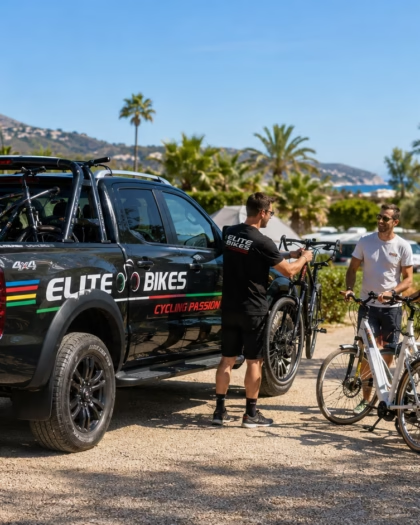
Autumn is the perfect time to make sure your bike is safe and ready for the road. At Elite Bikes Jávea we can check:
Ride safe.
Be visible.
Keep your bike ready.
Professional bicycle and e-bike workshop in Jávea for road bikes, mountain bikes, city bikes and e-bikes.
Visit Elite Bikes →Read the official BOE regulation →




 WhatsApp Chat